IP ban is a block set up by a server to reject the request made from a particular IP or range of IP addresses. The IP ban may have been implemented automatically due to an abuse pattern detected by the server or placed manually by an administrator. IP ban is implemented to protect the server from abuse such as brute force attacks, block emails from known spammers, and limit usage by users.
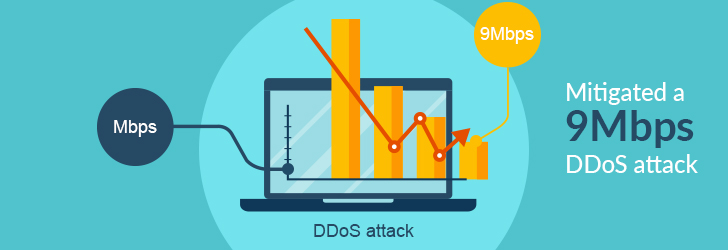
One of our sister website hosted on cloud server was recently hit by a 9Mbps DDoS, and the apache web server ran out of memory and crashed. The attack lasted more than 2-months with no known reason. We've taken a number of mitigation steps including installation of mod_security with mod_evasive, APF, BFD, DDoS Deflate and Rootkit and Traffic Control, but none came to rescue. Use of Linux provided WAF will mitigate the DDoS to the extent where CPU, Memory and Bandwidth are allowed; and in our case a single CentOS server with 4GB RAM wasn't sufficient to mitigate DDoS.
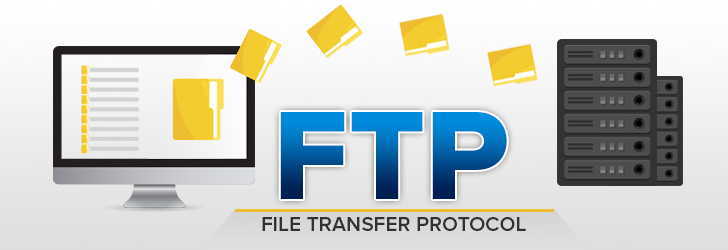
The File Transfer Protocol (FTP) is a protocol used in the Internet Protocol (IP) Suite used for the transferring of files across a network between a server and a client. The protocol was built from the ground up with the client-server model in mind and utilizes different connections for data and control between the two. Users can authenticate themselves with a clear-text sign-in protocol which is usually in the form of a username and password or they can connect to the server anonymously if it is configured to allow it. Transmissions of a user's login credentials can be secured by Transport Layer Security / Secure Sockets Layer (TLS/SSL); which can also encrypt the content of transmissions. Should this not be the case, the information is transmitted unencrypted which leaves it susceptible to a sniffing attack. In some scenarios, SSH File Transfer Protocol (SFTP) might be used but it should be noted that the protocol is technologically different than TLS/SSL.
Users receive multiple emails on a daily basis, some work-related, some personal and others from unknown sources. Sometimes it can be difficult to know which of these emails are legitimate and which aren't. Have you ever received an email from the government requesting your Social Security Number, a payment company stating your card was declined, or a website that claimed you were a contest winner? If you've ever doubted the authenticity of these emails, you can track their source location. These types of emails are ones in which you should trace the source to find your answer. Tracing the source of an email can be very useful, especially for verification purposes. In this blog, we'll show you how.
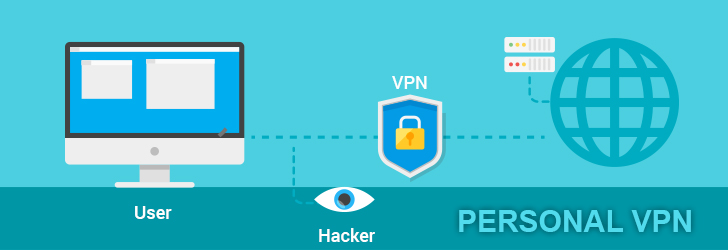
A VPN, or Virtual Private Network, is used to securely connect to another network via a public or a private network. A VPN creates a private network within a broader network, thus providing added-security using encryption and network tunneling mechanisms. A VPN is like a bridge that connects two islands (here, LANs) to establish an private, secure and more reliable connection between the two islands (here, local networks). This helps ease security and privacy issues; since the data transmitted over a VPN is encrypted and unreadable to general Internet community. There are two types of VPNs, namely remote-access VPN and site-to-site VPN.
The main purpose of using both proxies and VPN services is to hide the IP Address of the users or to prevent tracking bodies and individuals from identifying their location. For example, this may even be used to access certain sites that are not otherwise accessible in the user's country. A lot of VPN providers also provide proxy services apart from providing VPN services. You can also use many public proxy servers at little to no charge.
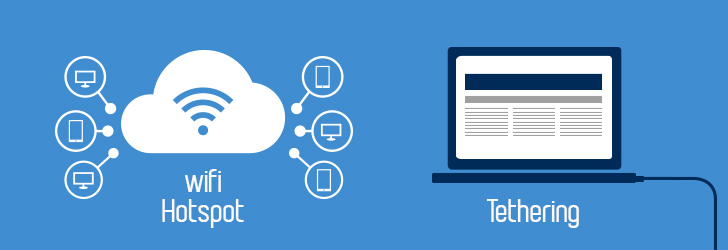
In the last two decades or so, a number of new ways through which we can access the internet have been introduced. Traditionally, the internet could be accessed via telephone wires, satellites, cables, and mobile devices. Often, tethering and hotspot are confused with each other.
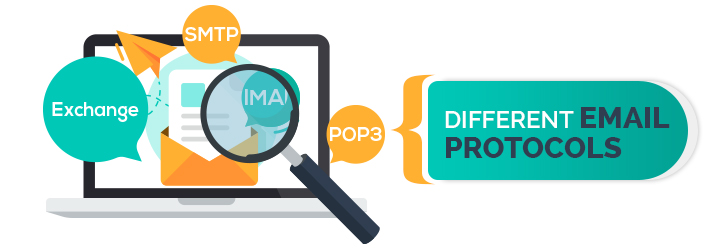
When we speak about email accounts, there are multiple protocols which are involved. This can be extremely confusing if you are not aware of what protocols exist for emails. Also, each of this protocols performs slightly different functionality. The commonly used protocols are- IMAP, POP3, SMTP, and Exchange. These are few protocol types one would come across while accessing an email client. The protocol details can be accessed via the server settings based on the email client being used.
Do you know why you're creating a website? Are you trying to sell products online, provide customer support to your business, or make money online through advertisement and affiliate marketing? Here are a few reasons why you may want to build websites.
At IPLocation.net, we prioritize the privacy and security of our visitors. We want you to feel confident and comfortable when browsing our website. That's why we want to assure you that we do not sell or share any personal information collected from our website.
Your trust is important to us. Whether you're browsing our site for information, or engaging with our content, rest assured that any data you provide remains strictly confidential. We adhere to stringent privacy policies and comply with all relevant regulations to safeguard your information.
Your privacy matters, and we are committed to maintaining the highest standards of data protection. If you have any questions or concerns regarding our privacy practices, please don't hesitate to reach out to us.