
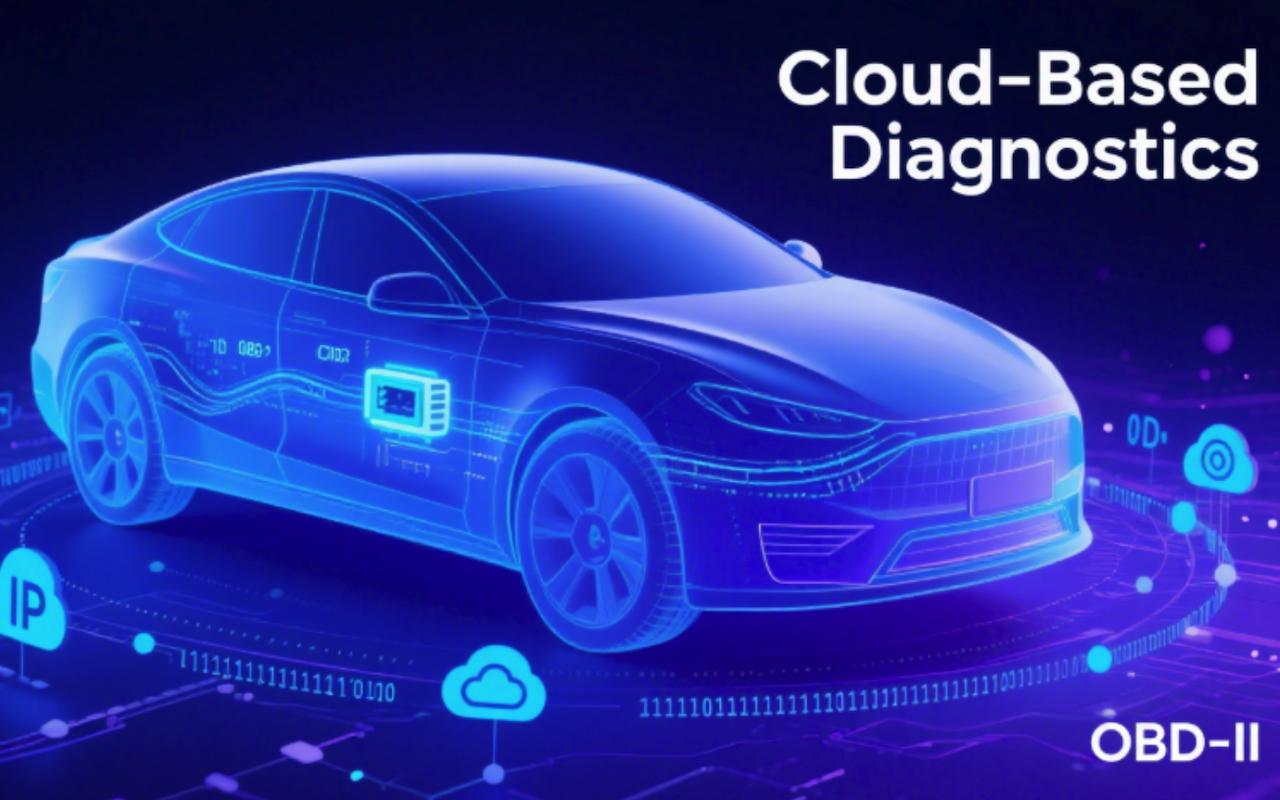
Modern vehicles are no longer just mechanical machines; they have evolved into complex, data-rich devices capable of communicating with cloud platforms, mobile applications, and even other vehicles. In many ways, today’s cars are mobile IoT (Internet of Things) endpoints, generating data streams comparable to the digital footprints created by IP-connected devices online. Understanding and leveraging this data has become increasingly critical for both individual car owners and fleet managers. This is where cloud-based vehicle diagnostics and professional tools like Foxwell scan tools come into play.
Vehicles as Connected IoT Devices
Every modern car equipped with an OBD-II (On-Board Diagnostics II) system generates massive amounts of data, monitoring everything from engine performance and fuel consumption to emissions and battery health. Traditionally, this data was only accessible in workshops using specialized tools. Today, cloud integration enables this data to be transmitted, stored, and analyzed remotely. Automakers, fleet operators, and service providers can now access real-time information about vehicle health, enabling predictive maintenance, early issue detection, and improved operational efficiency.
The Role of Cloud-Based Diagnostics
Cloud-based diagnostics is transforming how we interact with vehicle data.
Real-Time Monitoring
Vehicles can upload diagnostic data to cloud platforms while in operation. This enables instant alerts for potential issues, reducing downtime and costly repairs.
Predictive Maintenance
Historical data and machine learning algorithms can forecast when components might fail, helping car owners and fleet managers proactively schedule maintenance.
Data-Driven Insights
Aggregated vehicle data provides insights into driving patterns, fleet performance, and even environmental impacts, supporting more informed decision-making.
Bridging Local Tools and the Cloud
While cloud diagnostics is powerful, accurate local data collection remains crucial. OBD-II scanners help bridge this gap by capturing information from engines, transmissions, ABS, airbags, and batteries, which can then be synced with cloud platforms for further analysis.
For instance, a review of the Foxwell NT1009 highlights how such tools can provide comprehensive diagnostic coverage while maintaining compatibility with multiple OBD-II protocols. Insights from this review suggest that devices like the NT1009 can help ensure reliable data collection, supporting better maintenance decisions when combined with cloud-based analysis.
Impact on Fleet Management and Smart Mobility
For fleet operators, cloud-based diagnostics optimizes routing, reduces fuel costs, and extends vehicle uptime. In the era of smart cities and connected mobility, integrating OBD-II data into cloud systems enables more efficient transportation networks, predictive safety measures, and better resource allocation.
Conclusion
The evolution from IP-connected devices to OBD-II-enabled vehicles reflects the growing convergence of technology, data, and mobility. Cloud-based diagnostics is shifting automotive maintenance from reactive to proactive, providing users with actionable insights and enhancing vehicle performance.
Share this post
Author

Read the latest articles from Chris Chen
OBD-II Scanners and Data Security: Protecting Your Vehicle and Information
September 3, 2025
Modern cars are no longer merely mechanical machines; They are complex interconnected devices capable of generating and sharing large amounts of data. From engine performance to emissions and even driving habits, the information stored in today's vehicles can be accessed through the OBD-II port.
Learn moreLeave a comment
All comments are moderated. Spammy and bot submitted comments are deleted. Please submit the comments that are helpful to others, and we'll approve your comments. A comment that includes outbound link will only be approved if the content is relevant to the topic, and has some value to our readers.
Comments (0)
No comment