
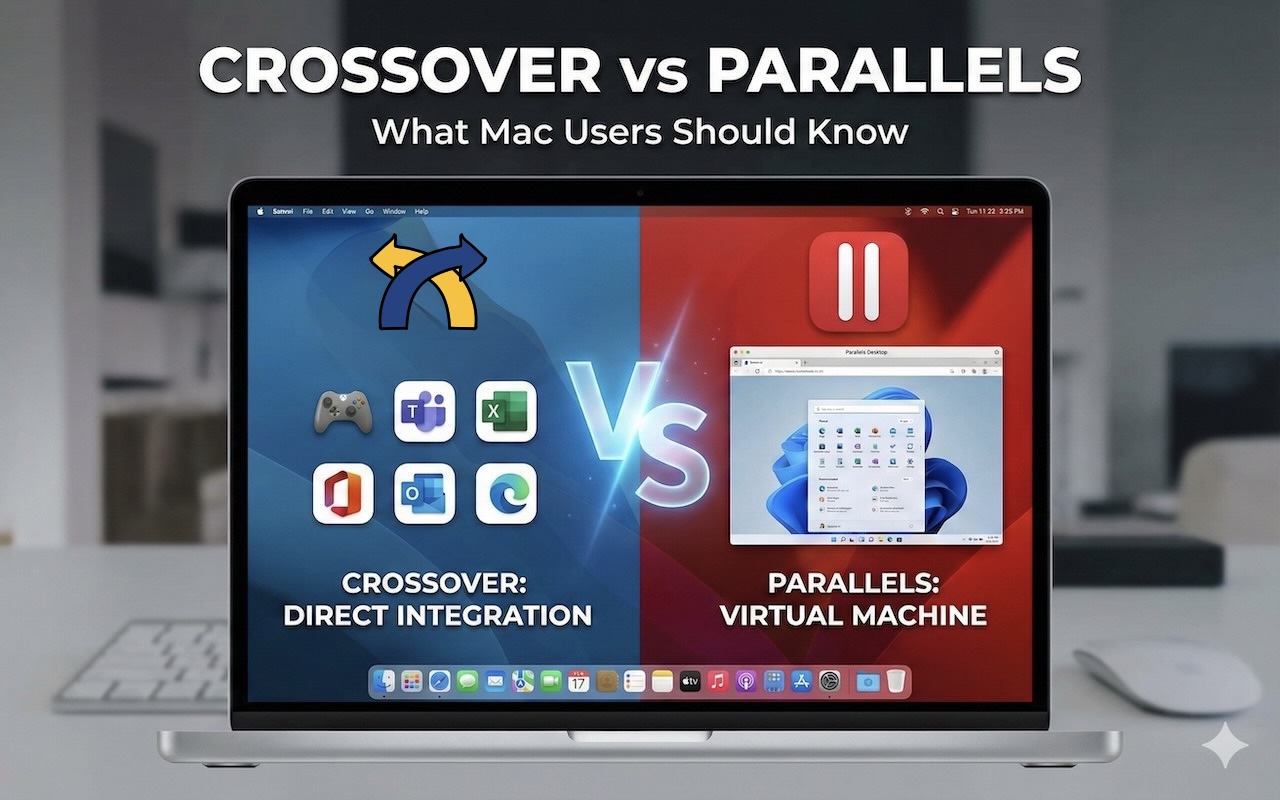
With other native applications, many Mac owners look for ways to run them on their systems. The most common ones are Crossover and Parallels. Each of these tools has a very different approach, with its own set of pros and cons. Knowing the differences between them helps in choosing the right one as per requirements.
1. Understanding Crossover
To make your choice easy, it is essential to compare Crossover vs Parallels for Mac users. Crossover allows you to run some programs without having to install a full OS. And it converts input from another OS so that it works on macOS. This solution does not need a prior license for another system, resulting in time and money savings. A lot of people pick it so they can write the simplest and most direct versions.
2. Exploring Parallels
Parallels is the tool that simulates other systems in macOS. This means that users can install any software that is designed for that system. While it is more compatible with other systems at the cost of additional hardware overhead and requires a separate license to run. This route is typically preferred for those who require multiple programs.
3. Installation and Setup
When using Crossover, you typically spend less time on the setup process. The application walks users through installing compatible programs in a very straightforward manner. The latter feature allows the OS files to not require any extra files, which simplifies the process of running the OS. On the other hand, Parallels requires a full OS to be installed before it can use any other software. It can also make the initial setup longer and more complex.
4. Performance and Resource Use
Crossover avoids using the resources that Bootcamp does by running programs as if they were native to macOS. It helps keep it fairly quick and efficient. Because of its fully simulated system, Parallels takes up more memory and processing power. If you have an older machine, Parallels runs slightly slower than Crossover does.
5. Compatibility and Software Support
The compatibility is not the same for the two solutions. Crossover does have plenty of support for the more common apps, but not every application will work perfectly. This may prevent certain features from working properly, depending on the software. Because it is essentially emulating another OS, Parallels can run more programs. That makes it a more versatile option for anyone who requires access to a wider array of programs.
6. Cost Considerations
They are especially popular with those seeking an economical deal, which is where Crossover tends to fit in. On the downside, they only charge for the tool and not an operating system license. Parallels normally lets you install the software along with a valid license for the other system. As a result, these limitations can lead to a higher overall price if you are a user who updates your software frequently.
7. Updates and Support
Regular updates are provided by both providers for stability and compatibility. Crossover updates are aimed at increasing the number of supported programs, as well as resolving bugs. Normally, updates from Parallels are full of features and improvements. Customer service is offered in both options, but the level of support can change based on the plan chosen.
8. User Experience
Crossover makes applications more integrated with macOS, making them feel somewhat like native programs. For the few people who use only a few selected applications, this creates a seamless experience. Parallels gives you access to an entire simulated system, but it is a little less integrated. You can seamlessly toggle between macOS and the virtual environment running Windows, enabling a much broader range of tasks.
9. Choosing the Right Solution
The choice between Crossover and Parallels depends on the specific needs of the individual. If you only need a couple of specific programs and want a simpler setup, Crossover may be preferable. Users who require more digestive apps or want to replicate a full OS may opt for Parallels. Your choice becomes easier when you take the system requirements, budget, and required assistance into consideration.
Conclusion
Crossover and Parallels both offer solutions for Mac users who occasionally need to run software from other platforms. They each have unique strengths and trade-offs. An individual can select the solution that best aligns with their needs and preferences by thoroughly comparing the options.
Featured Image generated by Google Gemini.
Share this post
Leave a comment
All comments are moderated. Spammy and bot submitted comments are deleted. Please submit the comments that are helpful to others, and we'll approve your comments. A comment that includes outbound link will only be approved if the content is relevant to the topic, and has some value to our readers.
Comments (0)
No comment