

Artificial intelligence (AI) is transforming the way individuals produce, edit, and share content on various platforms. Writers, marketers, and businesses can use AI tools to complete tasks that previously took hours, including writing blog posts, editing grammar, or generating ideas. This technology is faster and more efficient at work, but it also introduces new challenges. AI has the potential to enhance creativity, personalization, and reach, but it can also cause issues when used inappropriately. Here, we will examine in simple terms how AI can assist content creators, how it can negatively affect quality, and how to use it with wisdom to achieve the best outcomes.
How AI Helps in Content Creation
Here are some key ways AI is proving useful for content creators:
1. Faster Writing and Productivity
The greatest strength of AI is the speed at which it can generate content. Writing a blog post, product description, or social media update that could take hours can be completed in minutes with the help of AI. This increases productivity, and businesses can publish frequently and be responsive to trends. This can be significant in industries like media and e-commerce, where speed is essential.
2. Generates Fresh Ideas and Perspectives
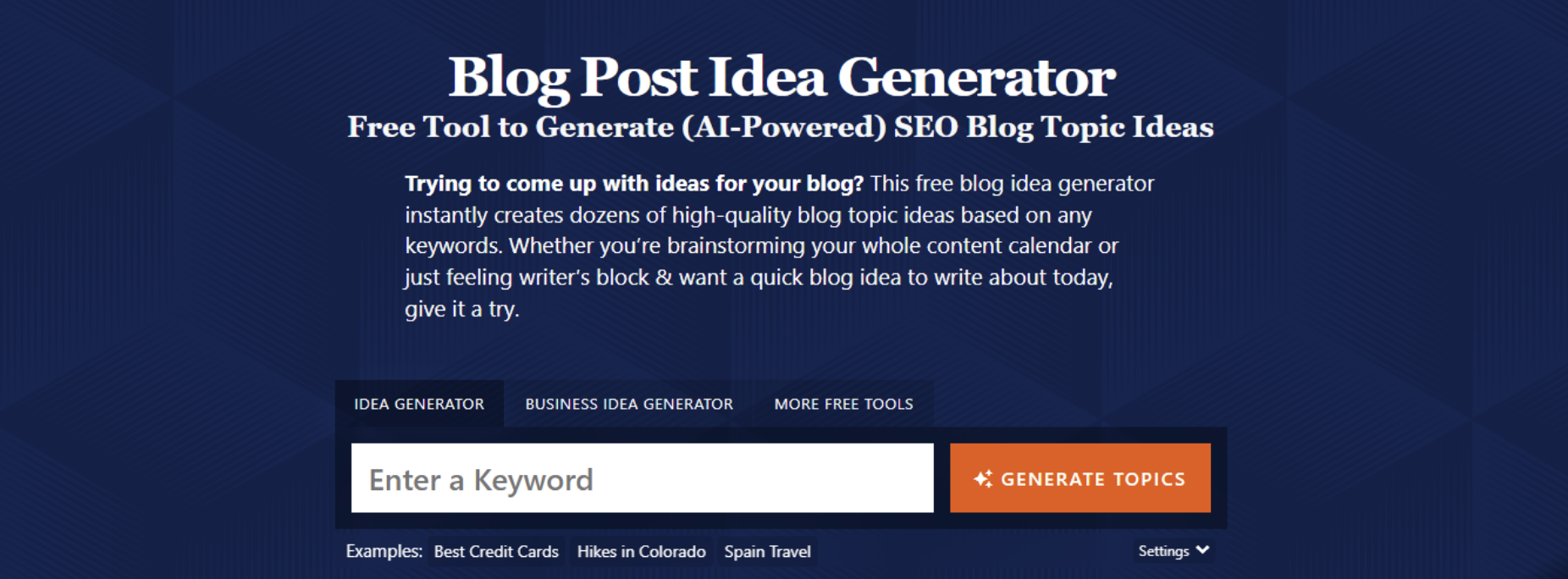
Staying ahead in today’s fast-paced digital world requires more than just covering broad topics; it’s about offering unique perspectives that resonate with readers. Innovative AI tools can analyze trends, highlight competitor gaps, and suggest original angles that spark curiosity. Instead of another article on “Healthy Eating,” you could explore “How Smart Meal Planning Apps Are Reshaping Nutrition in 2025.” Tools like the Blog Idea Generator make it easier for writers to discover fresh, relevant ideas that stand out. By using such resources, creators can remain innovative, timely, and consistently ahead of the competition.
3. Enhances Storytelling with Data
Its ability to analyze big data and summarize it in simple terms or a visual representation is possible with AI. A journalist can input raw survey data into AI and receive ready-to-use story insights in a short time. This converts dry figures into interesting information supported by facts.
4. Personalization at Scale
AI does not merely rewrite emails, but it can analyze audience behaviors on the fly and adjust tone, timing, and even formats. As an example, it can suggest that video newsletters should be sent to younger readers and text blogs with more depth to professionals. This is more than traditional personalization and makes campaigns smarter.
5. Voice and Audio Content Creation
AI is now producing voiceovers and even podcasts that sound realistic. Brands can employ AI to convert written articles into audio and reach out to audiences who prefer listening to reading. This assists in increasing accessibility and reach.
6. Creative Collaboration
Certain AI tools are not meant to replace but to co-create with writers. They give hints, variant wordings, or brainstorming ideas. They do not create full articles, but rather serve as a smart writing companion that keeps the writing process going.
7. Humanizing AI-Generated Text
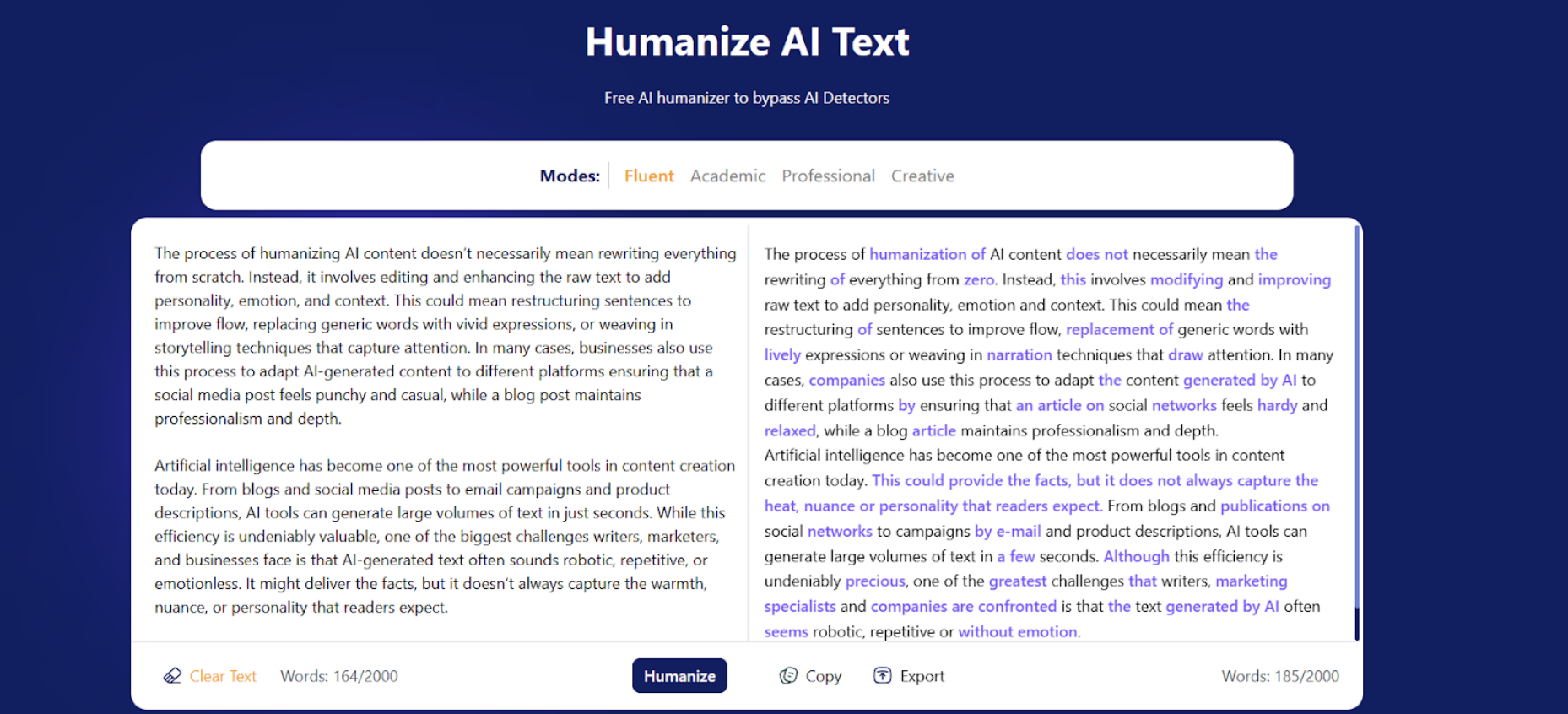
A common issue with AI writing is that it may sound robotic or predictable. In scenarios like that, a humanize AI text tool can help fix this by rewriting AI content into a more natural tone. It offers modes such as Fluent, Academic, Professional, and Creative, so you can adapt tone based on your audience. Content writers, students, businesses, HR professionals, and even journalists can use it to ensure their work feels authentic and removes AI detection. It also reduces plagiarism risks, supports multiple languages, and is completely free, making it a useful partner to balance AI efficiency with human creativity.
How AI Can Damage Your Content
While AI offers benefits, there are also risks that can reduce the quality and impact of your work:
1. Lack of Originality
It tends to create content based on what is already on the internet. This implies that your work might sound the same as what is already in the market. It may be unoriginal, uncreative, and non-unique. When readers encounter repetitive or predictable text over time, they might lose interest in what you are writing.
2. Robotic Tone
AI-generated text can be more mechanical and less human. It might be emotionless, devoid of narration, or not personal. Not all readers would relate to such content, which would lower engagement. An inspirational blog, for instance, would lack depth when created by AI without a human touch.
3. Factual Errors
AI does not always comprehend context. It may produce inaccurate data or misinterpret facts. Publication of such material can be detrimental to your reputation. When a business presents wrong information in a report, it can lose credibility among its customers and audience.
4. Over-Dependence on AI
Over-reliance on AI may be detrimental to your writing. When you apply AI to all things, you may lose your creative thinking and independent writing skills. In the long run, such a reliance can cause you to struggle to introduce new and original ideas to your work.
5. Risk of Plagiarism
As AI reads online materials to create text, it might create sentences that are almost identical to the existing ones. This may cause plagiarism problems, which are harmful to your reputation and search engine optimization. In other instances, it may even lead to legal issues in case of reproduction of copyrighted material without a license.
6. Search Engine Penalties
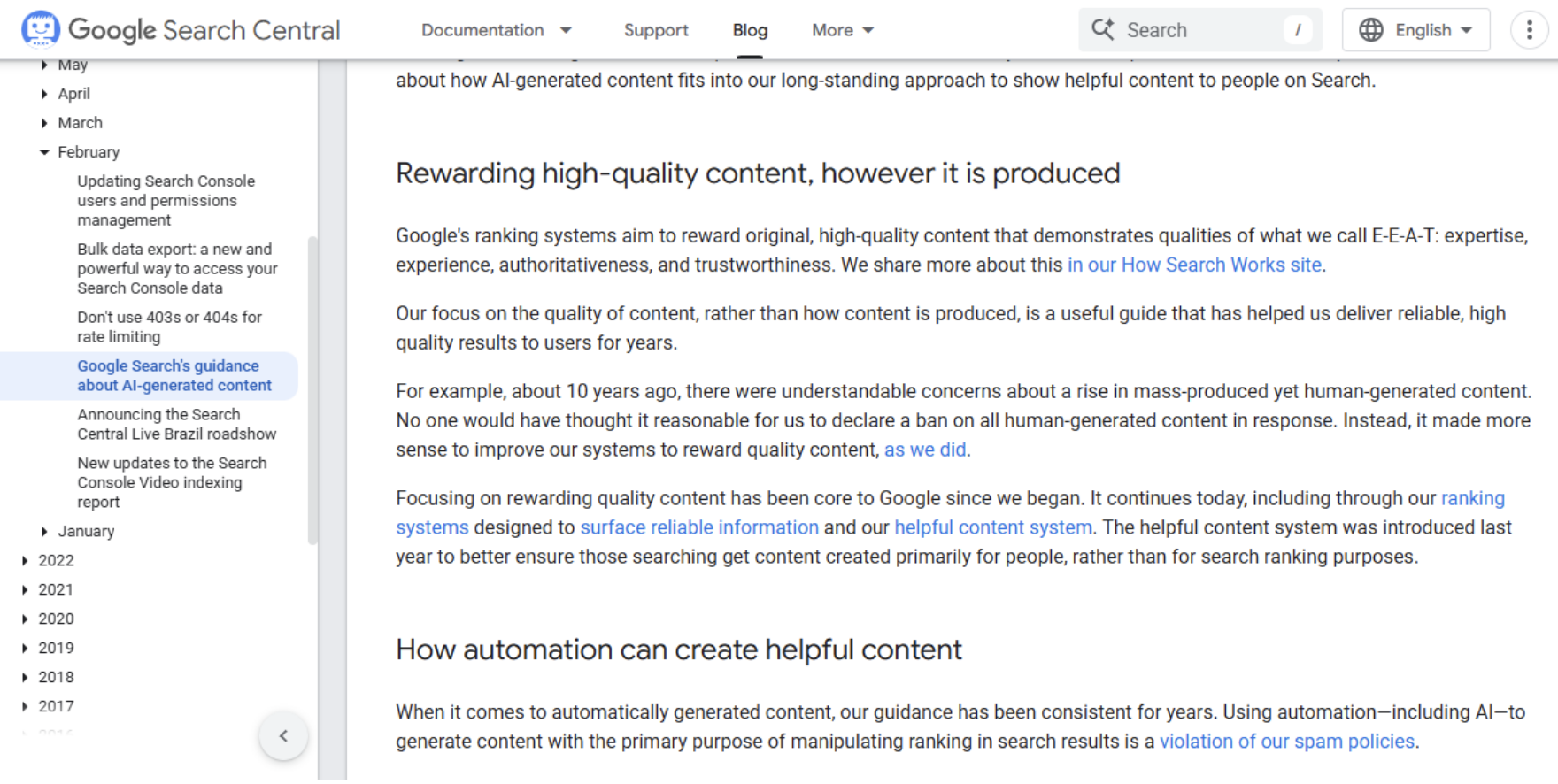
Google and other search engines want high-quality, human-like content. If your website is full of AI-generated content that looks spammy, it may get penalized. This will lower your ranking instead of improving it. Such penalties can significantly affect your site traffic and make it harder for your content to reach the right audience.
Side-by-Side Comparison
Here’s a quick overview of how AI can both support and harm your content creation efforts:
| How AI Helps | How AI Can Damage |
|---|---|
| Saves time and speeds up writing | Can produce generic or unoriginal content |
| Suggests fresh ideas and angles | It may sound robotic and lack a personal tone |
| Turns data into clear stories | Sometimes introduces factual errors |
| Personalizes messages at scale | Risk of over-dependence on automation |
| Creates audio and voice content | May accidentally produce plagiarized text |
| Acts as a creative collaborator | Search engines can penalize low-quality AI text |
Conclusion
AI is an effective content creation tool. It can be time-saving, quality-enhancing, and SEO-friendly. But when not used carefully, it may harm your work with inaccuracies, plagiarism, and a mechanical tone. The trick is to make AI an assistant rather than a substitute. Always put your personal touch, emotions, and creativity into your content to make it unique. AI will help you to be efficient, and human creativity will make your content smart and authentic. Therefore, apply AI intelligently and get the best out of it!
Share this post
Leave a comment
All comments are moderated. Spammy and bot submitted comments are deleted. Please submit the comments that are helpful to others, and we'll approve your comments. A comment that includes outbound link will only be approved if the content is relevant to the topic, and has some value to our readers.
Comments (0)
No comment