
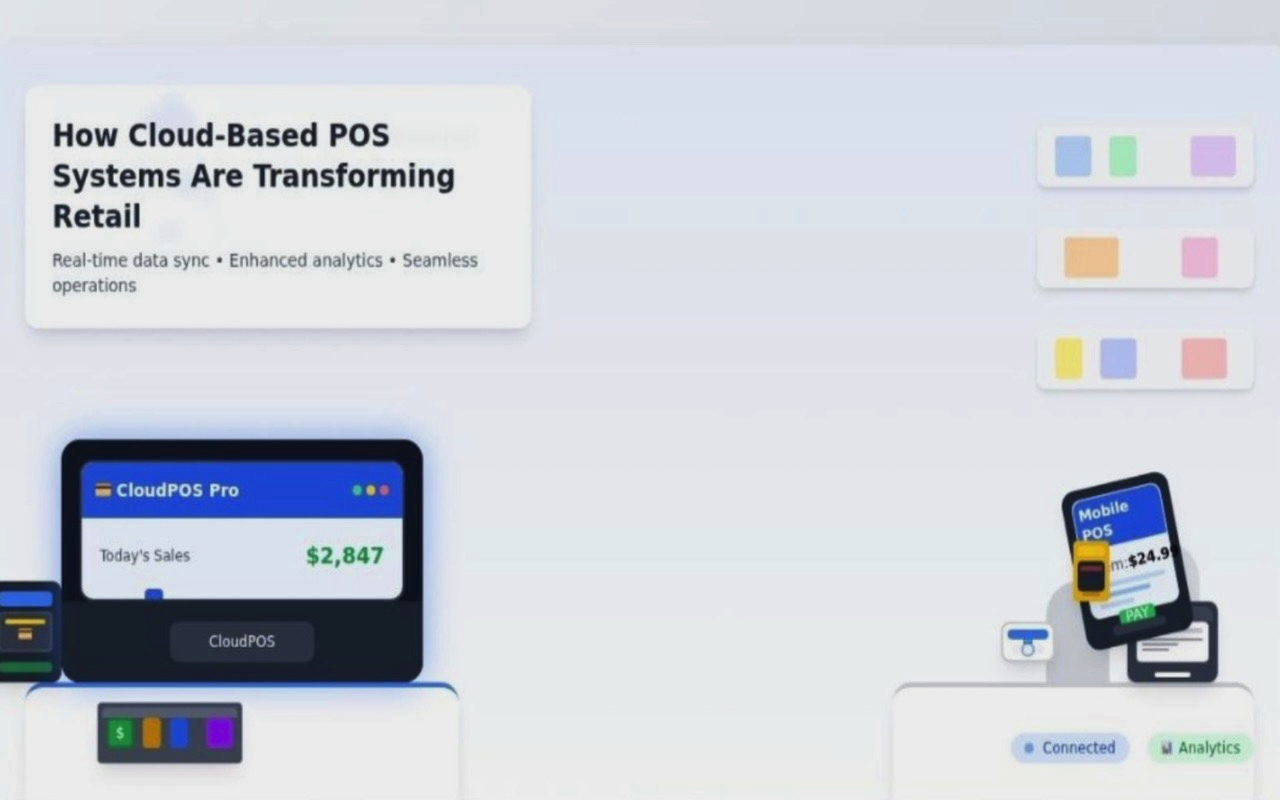
Cloud based systems are applications that are accessed and used over the internet rather than being installed on a computer. There are 3 types of cloud based systems, SaaS (software as a service), IaaS (Infrastructure as a service), PaaS (Platform as a service). These cloud based systems offer applications, Cloud providers, and platforms for developing.
Cloud POS systems can be easily combined with other business applications like CRM systems, ecommerce platforms which streamline operations and increase overall efficiency.
What are cloud based POS systems?
You're likely familiar with the concept of cloud computing, and cloud-based POS (Point of Sale) systems operate on similar principles. These systems transmit product data and software details directly through cloud servers, enabling seamless real-time access and updates. As a subset of cloud software development, implementing a cloud POS system typically involves partnering with a software development company experienced in cloud technologies. An active internet connection is required to access these services, which are usually hosted on cloud servers or other shared computing resources.
Managing several storefronts or sales channels can be challenging with traditional point-of-sale (POS) systems since they save data locally. On the other hand, a cloud point-of-sale system offers flexibility and real-time visibility, regardless of whether you are managing a single store or a chain of locations in several locations.
Three Core Cloud Service Models in POS Tech
There are 3 cloud based service models in POS tech;
1. SaaS (Software as a Service)
The full POS application is delivered through the cloud by SaaS-based POS platforms, usually on a subscription basis. Without having to worry about updates, maintenance, or installation, retailers may use the program via an app or web browser. It includes some key benefits easier in setting up and deployment of the process, automatic updates and patches, Available from any device with an internet connection, and Perfect for retailers who are tiny to medium-sized.
Example: Shopify POS
2. PaaS(Platform as a Service)
PaaS provides developers with a cloud platform and environment in which to create, test, and implement unique POS apps. It's perfect for tech teams or vendors developing customized POS solutions, even though merchants don't utilize it as frequently. It includes some benefits, supports highly customized POS features and updates, Scalable infrastructure that doesn't require server management, Perfect for enterprise-level customization or third-party point-of-sale developers, permits integration with analytics, artificial intelligence, and other services.
Example: Google cloud platform
3. IaaS (Infrastructure as a Service)
Storage, servers, networking, and other virtualized computer resources are made available online by IaaS. With complete control over infrastructure, security, and configuration, retailers or point-of-sale suppliers can host their own POS apps.It includes benefits like Total adaptability and command, beneficial for large retailers with internal IT departments, able to accommodate hybrid models (on-premises and cloud), Secure, high-performing settings for tasks that are vital to the mission.
Example: Amazon web series (AWS)
Key Features: That Define Cloud POS
There are numerous key features that define cloud based POS;
1. Remote Access
Cloud-based POS systems allow businesses to access and manage inventory from anywhere. This includes tracking stock levels, managing inventory, minimizing stock issues, and enhancing operational efficiency.
2. Device Compatibility
Traditional POS systems offer limited device support. In contrast, cloud-based POS systems work seamlessly on smartphones, tablets, and laptops—improving customer experience and flexibility for retailers.
3. Cloud Storage
Cloud POS systems provide enhanced data security. Unlike traditional systems, which pose risks of data breaches and cyberattacks, cloud storage helps safeguard sensitive business information.
4. Automatic Updates
Cloud-based POS software updates automatically, reducing the need for manual IT maintenance and ensuring businesses always run on the latest version.
5. Flexible Pricing Models
Many cloud POS solutions offer subscription-based plans, making them cost-effective and scalable for businesses of all sizes.
6. Integrated Processing of Payments
These systems support multiple payment options—including contactless payments, digital wallets, UPI, and credit/debit cards—enabling faster and smoother checkout experiences.
7. Mode Offline
Even during internet outages, cloud POS systems can continue processing transactions and sync data once connectivity is restored, ensuring business continuity.
8. Customer Relationship Management (CRM)
CRM features like customer profiles, purchase history, loyalty programs, and personalized marketing are often integrated to boost customer engagement and retention.
9. Accessibility via the Web
Cloud POS systems can be accessed from any internet-enabled device using web browsers or dedicated apps, allowing real-time management across multiple locations.
How does cloud based POS systems work in transforming retail?
Cloud POS solutions are changing how retail organizations function, engage with consumers, and grow over time. They are more than just digital cash registers.
1. Omnichannel Functionality and Real-Time Control
Retailers can manage multiple channel outlets from one central hub. Real-time data ensures accurate inventory tracking and fast decision-making, no matter where you're operating from.
2. Better Customer Experience
After selling the product or services to customers, the sales team makes sure to take feedback to improve wherever required. They offer loyalty rewards and digital receipts to customers or users.
3. Increased Flexibility and Speed
You can quickly increase users, devices, or locations as your business expands without having to purchase additional hardware. Seamlessly combines with other systems (such as accounting, CRM, and eCommerce) to form a unified retail environment.
4. Smarter Data and Reporting
Cloud POS systems collect and analyse sales, customer behaviour, and inventory trends across various channels or outlets. It leads to smarter inventory planning, targeted marketing, and efficient staff scheduling.
5. Reduces the Workloads of IT
Cloud-based POS systems reduce the workloads of IT for software bugs and hardware. Vendors manage security patches and updates, ensuring your systems are current and compliant.
Benefits of cloud based POS systems
Cloud based POS systems offer numerous advantages including scalability, integration, remote access and many more. Let’s get into depth what are the key benefits of cloud based POS systems.
1. Remote Access and Real-Time Management
Businesses may manage operations from any location with an internet connection thanks to cloud-based POS systems' remote access and real-time administration features. In order to facilitate data-driven decision-making, they also offer sophisticated reporting and analytics tools that provide insights into sales, inventory, and consumer behavior.
2. Software Updates That Happen Automatically and Less Downtime
Cloud-based POS systems reduce manual efforts. Unlike traditional systems that require time-consuming manual updates, cloud POS software is updated automatically without disrupting operations.
3. Cost Savings
Cloud-based POS systems are more cost-effective than traditional setups due to lower initial hardware requirements, minimal ongoing maintenance, and operational efficiency. Subscription-based pricing eliminates the need for expensive software or equipment purchases and reduces the demand for dedicated IT staff.
4. Improved Security and Backup of Data
These systems enhance data protection through offsite storage, encryption, access controls, and automatic backups. This reduces the risk of data loss from local hardware failures and boosts overall security.
5. Enhances Scalability and Flexibility
Cloud POS systems allow businesses to scale effortlessly as they grow, adding users, locations, or services without major infrastructure changes. Features like remote access and automatic updates further support business agility.
6. Increased Efficiency and Accuracy
By automating processes and integrating core functions, cloud-based POS systems minimize human errors, streamline operations, and improve inventory management. The result is faster transactions and higher customer satisfaction.
7. Better Customer Experience
Cloud POS systems enhance customer engagement through personalized service, loyalty programs, and faster checkout. They support seamless omnichannel experiences, improving satisfaction and retention.
8. Advanced Reporting and Analytics
These systems offer customizable dashboards, real-time analysis, and multi-format reports. Access to comprehensive data across devices helps businesses make informed decisions and boost profitability.
9. Simplifies Multiple Location Management
Cloud-based POS systems streamline operations for businesses with multiple outlets or sales channels. They provide centralized control, consistent processes, and easy monitoring across all locations.
Real-World Retail Use Cases
Let’s know about some Real world retail operations use cases;
1. Checkout Anywhere
Cloud-based POS systems allow businesses to process transactions from virtually any location—not just a fixed checkout counter—by using mobile devices like tablets and smartphones. This flexibility enhances customer convenience and speeds up service in dynamic retail environments.
2. Pop-Up Ready
Unlike traditional systems, cloud POS solutions can handle vast amounts of data with ease. Their real-time data access enables rapid setup, streamlined transactions, and fast decision-making, making them ideal for temporary or mobile retail setups like pop-up shops.
3. Inventory Insights
Cloud POS systems provide real-time inventory tracking and sales trend analysis. They support automated reordering and help optimize stock levels to reduce waste and boost profitability. For example, a fashion boutique using a cloud POS can detect when a popular shirt is running low across locations and restock promptly to prevent missed sales and unhappy customers.
4. Personalized Customer Profiles
These systems create unified customer profiles across channels. For instance, if a customer browses t-shirts online and adds items to their cart without purchasing, the POS system can identify them when they visit a physical store. Sales associates can then view the customer’s history and suggest related products, increasing the chances of conversion and customer satisfaction.
Why Are Retailers Moving Away from Traditional POS?
Retailers are shifting from traditional POS systems to modern cloud based solutions, here are some key aspects;
1. Lack of Flexibility and Mobility
Traditional POS systems are typically hardware-dependent and restricted to fixed locations. In contrast, cloud-based POS systems offer real-time data tracking and enable staff to assist customers from anywhere in the store, improving overall service flexibility.
2. Cost and Maintenance Challenges
Traditional systems often come with high upfront costs due to expensive hardware and software licenses, along with ongoing maintenance requirements. Cloud-based solutions reduce these burdens through affordable subscription models and minimal infrastructure.
3. Limited Integration Capabilities
Modern retail demands seamless omnichannel experiences, which traditional POS systems struggle to support. They often lack integration with tools like CRM, eCommerce platforms, and inventory software. Cloud-based systems, on the other hand, offer smooth integration with a wide range of business tools without disrupting operations.
4. Scalability Issues
Traditional POS systems make scaling across multiple locations difficult and costly. Cloud-based POS solutions allow businesses to expand quickly without major technical hurdles, making them more suitable for growth-focused retailers.
5. Real-Time Data Analytics
Retailers today rely on real-time data for fast, informed decision-making. Traditional POS systems often lack advanced analytics and centralized reporting. Cloud POS platforms provide live dashboards, performance tracking, and data-driven insights to enhance operational strategies.
6. Security and Compliance
Older POS systems are more vulnerable to data breaches and may not meet current compliance standards. Cloud-based systems receive regular security updates and are built with compliance in mind, offering better protection for sensitive customer and transaction data.
7. Centralized Management and Remote Access
Managing multiple store locations is easier with centralized control. Cloud POS systems allow retailers to access a unified dashboard remotely, enabling real-time management of sales, inventory, and staff performance from any location.
Conclusion
Cloud Based POS systems are revolutionizing Retail operations which involves faster decision making, improves efficiency, and enhancing customer experience. Adopting a cloud point-of-sale system is now strategically necessary as technology advances and customer expectations rise. In addition to streamlining operations, retailers who embrace this shift will set themselves up for long-term success in a market that is becoming more and more competitive.
Share this post
Leave a comment
All comments are moderated. Spammy and bot submitted comments are deleted. Please submit the comments that are helpful to others, and we'll approve your comments. A comment that includes outbound link will only be approved if the content is relevant to the topic, and has some value to our readers.
Comments (0)
No comment