
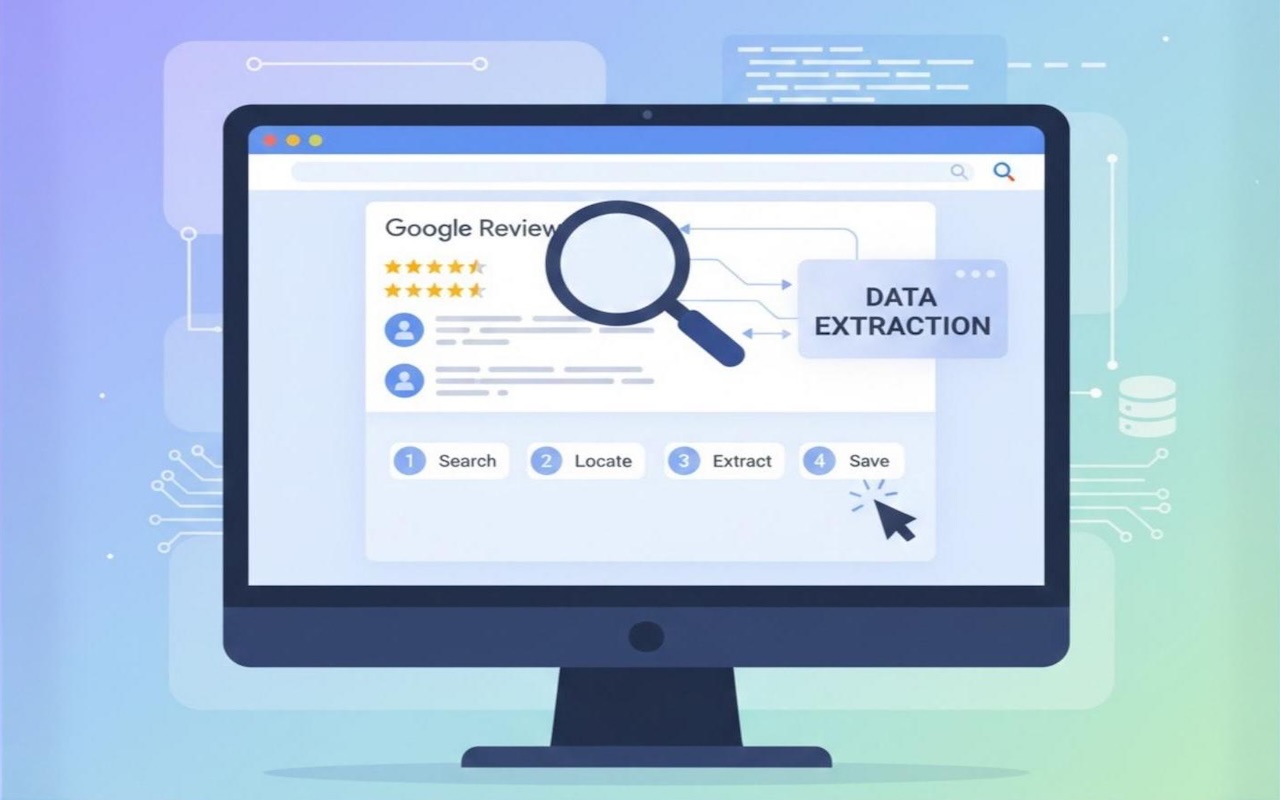
Google Reviews have become one of the most influential trust signals on the internet. With more than 1 billion users relying on Google Reviews every month, the feedback posted on business listings directly shapes customer decisions, local rankings, and brand reputation. For analysts, marketers, and researchers, scraping Google Reviews provides access to rich consumer sentiment, detailed behavioral insights, and competitor intelligence. Whether you’re building a dataset for sentiment analysis or simply want to understand what customers are saying about your industry, extracting this information can be incredibly valuable if done responsibly.
Below is a complete guide explaining what you can learn from Google Reviews, how to scrape them ethically, and what challenges you should expect along the way.
What is Google Review?
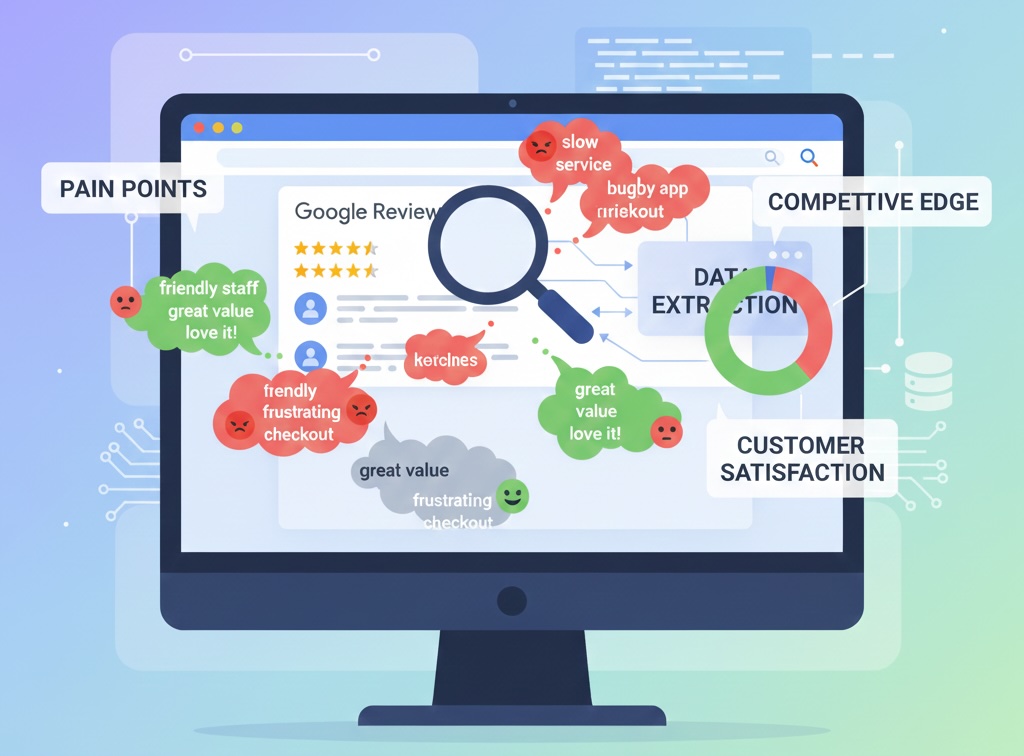
Google Reviews offer far more than simple star ratings. The text reviews themselves form a real-time diary of customer experiences, frustrations, praise, and expectations. By analyzing these patterns at scale, businesses can uncover recurring pain points, identify strengths competitors lack, and understand what truly influences customer satisfaction.
For example, a restaurant may believe its service is its strongest asset, but scraping and analyzing 2,000 reviews might reveal that customers consistently praise the food but complain about slow seating. Similarly, a hotel chain might discover that negative reviews spike every time a specific location undergoes staffing changes.
Researchers and data scientists use scraped reviews to build sentiment analysis models, track how public perception evolves over time, or compare how two competing brands respond to customer feedback. Competitor analysis becomes easier as well: a car repair shop can compare the tone, frequency, and rating distribution of its reviews against those of rival shops within the same city to identify gaps in customer service.
What Data Can You Scrape?
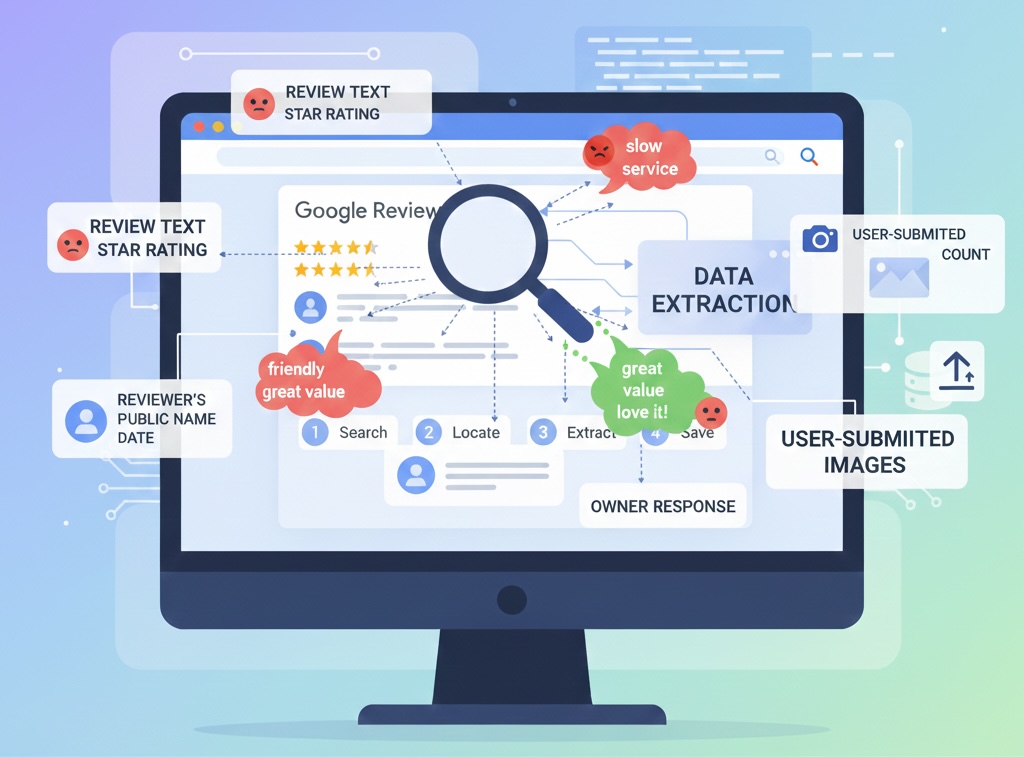
Scraped Google Reviews typically contain publicly visible details such as the review text, star rating, date, and the reviewer’s public display name. Many reviews also include helpful vote counts, business owner responses, and occasionally images shared by customers.
This data paints a complete picture of customer experience. For example, images posted by guests at a hotel may reveal cleanliness issues that aren’t explicitly mentioned in text, or owner replies may show how effectively a business manages public complaints. Combined, these signals help analysts understand not just what customers feel, but how businesses engage with them.
Legal and Ethical Considerations
Before scraping any Google data, it’s important to understand the boundaries. Google’s Terms of Service restrict automated extraction of certain types of information, and scraping must never involve collecting or storing personally identifiable information beyond what is publicly displayed. Ethical scraping also means respecting rate limits, avoiding aggressive crawling, and using the data solely for legitimate research, analysis, or business insight—not for unsolicited outreach or harmful activities.
Review scraping should focus only on publicly available content and should avoid downloading sensitive media such as personal photos unless absolutely necessary. Remaining mindful of these boundaries ensures compliance and helps protect user privacy.
Step-by-Step: How to Scrape Google Reviews
Scraping Google Reviews becomes much more manageable when you break the process down into clear, structured steps. Whether you’re gathering a handful of reviews for a small research project or building a large dataset for sentiment analysis, the workflow generally follows the same pattern: identify the right business listing, choose an appropriate extraction method, retrieve all available review data, clean and organize it, and finally analyze the results. Each step plays a crucial role in ensuring your dataset is accurate, complete, and ready for meaningful insights. The guide below walks you through this process from start to finish.
Step 1: Identify the Business or Location
Scraping begins with identifying the correct listing. Many businesses have multiple branches, franchise locations, or similarly named competitors. Using the exact Google Maps URL or the “Place ID,” which uniquely identifies each listing, helps avoid mistakes. A small difference such as scraping “Target Superstore” instead of “Target Express”, can drastically change the dataset.
Step 2: Choose a Scraping Method
There are three main methods to extract Google Reviews:
- Manual copying is the simplest option. It involves reading reviews directly from the Google Maps interface and copying them into a document. While slow, it works well for one-off tasks or micro-datasets, such as scraping 20–50 reviews for qualitative analysis.
- Using the Google Maps Places API is the most compliant method. Google provides an official API that offers structured data such as ratings, total review counts, and a limited number of review excerpts. This method is ideal for developers who need clean, reliable data and are willing to operate within the API’s quota and cost structure.
- Automated scraping tools offer the greatest flexibility. Tools like Decodo Scraping API, Puppeteer, Playwright, or BeautifulSoup simulate user interactions, scroll through thousands of reviews, and capture dynamic content. These tools can extract full review bodies, images, owner responses, and chronological data—though they require technical skill and careful rate limiting to avoid bot detection.
Step 3: Handle Pagination and “Load More Reviews”
Google Reviews load dynamically. As you scroll, Google fetches additional review batches via asynchronous requests. Automated scrapers must simulate this scrolling behavior to retrieve all available reviews. Headless browsers mimic real user actions, ensuring that the scraper captures reviews beyond the default first 10–20 displayed.
Step 4: Structure and Clean Your Data
Once collected, the raw review data needs to be cleaned. Dates may need normalization into a unified format, ratings should be stored as numerical values, and text may require removal of emojis or special characters depending on the type of analysis. Duplicates should be removed, especially when scraping multiple times over a period to track changes.
For example, a hotel might scrape reviews monthly to track whether renovation efforts are improving guest sentiment. Cleaning ensures each month’s dataset remains consistent and comparable.
Step 5: Analyze the Results
This is where the real value emerges. Review datasets can be analyzed through sentiment scoring, word frequency mapping, trend visualization, and comparison across competitors. Businesses often categorize reviews by service, pricing, speed, cleanliness, or staff friendliness to discover what influences customer loyalty most.
Data science teams can build visual dashboards showing review volume over time, average rating shifts, and the relationship between new features or business changes and public response. Even simple charts can reveal surprising truths, for instance, a spike in one-star reviews after a software update might indicate widespread bugs or interface issues.
Challenges in Scraping Google Reviews
Scraping Google Reviews isn’t always straightforward. Google frequently updates its interface, which can break scraping scripts without warning. CAPTCHAs and bot detection systems often appear after too many requests, making large-scale scraping difficult without proxy rotation or smart request scheduling. Additionally, reviews are filtered based on language, region, and “relevance,” meaning the same listing may display different reviews depending on user context.
Handling media content, such as user-uploaded images or videos, also introduces challenges in storage and processing. These elements may require additional steps to download or analyze safely and responsibly.
Best Practices for Responsible Scraping
To scrape reviews ethically, it’s important to use delays between requests and avoid excessive load on Google’s servers. Automated tools such as Decodo should mimic human browsing behavior and use appropriate user-agent strings. Publicly visible data should be the only content collected, and analysts should refrain from storing unnecessary personal details. Transparent documentation, including timestamps and extraction methods, helps maintain accountability.
Since Google Reviews evolve constantly, datasets should be refreshed periodically. Responsible scraping ensures data accuracy while respecting platform integrity.
Conclusion
Scraping Google Reviews can unlock a deep understanding of customer sentiment, competitive positioning, and service quality. With more than a billion users generating feedback, the Google ecosystem offers a powerful lens into real consumer behavior. When approached responsibly, scraping can transform raw, unstructured reviews into actionable insights that help businesses grow, improve, and understand their customers at a level that static ratings alone cannot deliver.
Images generated by Google Gemini.
Share this post
Leave a comment
All comments are moderated. Spammy and bot submitted comments are deleted. Please submit the comments that are helpful to others, and we'll approve your comments. A comment that includes outbound link will only be approved if the content is relevant to the topic, and has some value to our readers.
Comments (0)
No comment