
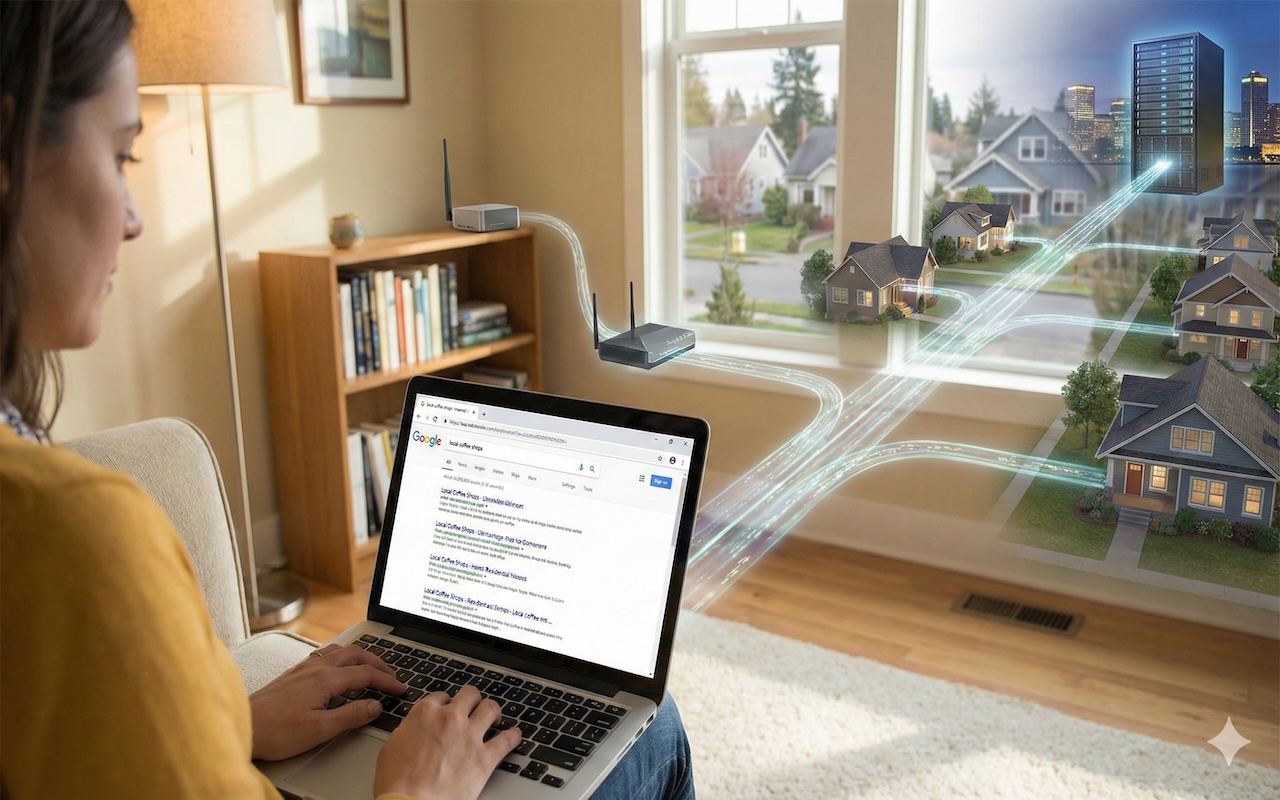
Staying anonymous and gathering data online has become increasingly important, especially for businesses relying on automation, research, and global visibility. One tool that continues to gain traction is the proxy, a reliable way to access the internet via geographically targeted IP addresses rather than your own.
This guide explains what a residential proxy is, how it works, the different types you can use, and the top use cases.
What Is a Residential Proxy?
A residential proxy is an intermediary server that routes your internet traffic through an IP address assigned by a legitimate Internet Service Provider (ISP). Unlike datacenter proxies, which originate from cloud servers, residential proxies appear to websites as real devices in real homes.
This makes them significantly more trustworthy, harder to detect, and far less likely to trigger blocks or CAPTCHAs. Because the IP addresses belong to real households, online platforms treat them as authentic user connections.
How Residential Proxies Work
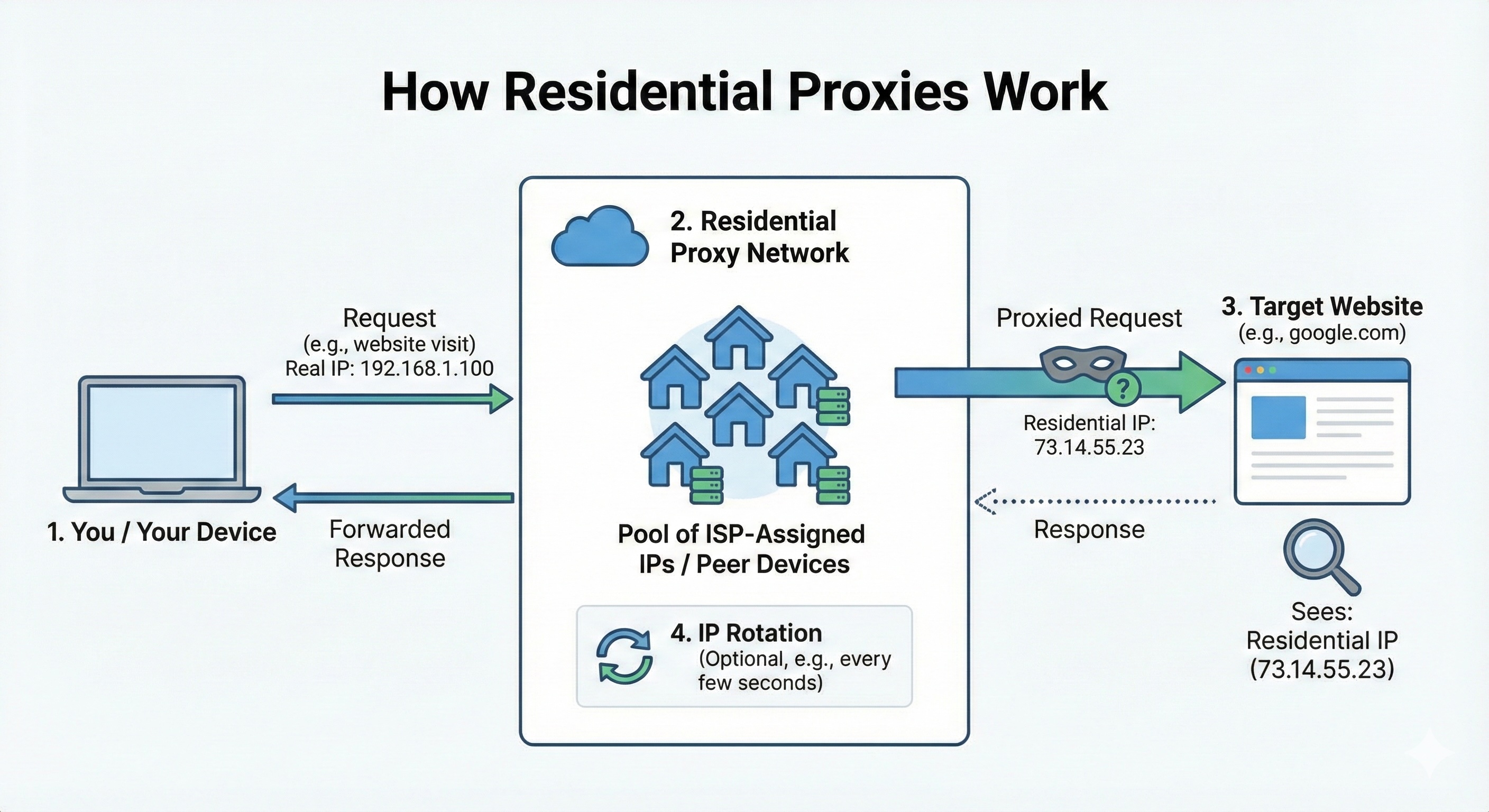
Residential proxies operate by routing your traffic through a peer device or a pool of ISP-assigned IPs. Here’s how the process works:
- You send a request (e.g., visiting a website).
- Your request passes through a residential proxy network instead of going directly to the destination.
- The target website sees the ISP-issued home IP, not your real IP or datacenter server.
- IP rotation may occur automatically, giving you a fresh residential IP every few seconds or minutes.
Ethical sourcing is essential for reputable providers, including the use of opt-in peer networks, clean IP pools, and transparent data policies.
Types of Residential Proxies

1. Rotating Residential Proxies
- Automatically switch IPs at short intervals.
- Ideal for web scraping, price monitoring, SERP tracking, and high-volume automation.
2. Static (Dedicated) Residential Proxies
- You keep one static residential IP for an extended duration.
- Best for account management, online marketplaces, and tasks requiring a consistent identity.
3. ISP Proxies (Hybrid Residential)
- Datacenter hardware + ISP-assigned IP ranges.
- Offer faster speeds with residential-level trust.
4. Shared vs. Private Residential Proxies
- Shared: Multiple users share a residential IP pool.
- Private: Exclusive access for more stability and security.
Residential Proxies vs. Datacenter & Mobile Proxies
Choosing the right type of proxy often comes down to balancing trust, speed, and cost—and understanding the differences between residential, datacenter, and mobile proxies is essential. Each option offers distinct advantages depending on your goals, from large-scale data collection to secure account management. Residential proxies provide the highest authenticity because they use real household IP addresses, while datacenter proxies prioritize raw speed and affordability. The comparison below highlights these key differences and helps clarify when each type is the best fit.
| Residential vs. Datacenter | Residential Proxy | Datacenter Proxy |
|---|---|---|
| High trust level | ✔️ | ❌ |
| Rarely blocked | ✔️ | ❌ |
| Slower speeds | ✔️ | ❌ |
| More expensive | ✔️ | ❌ |
Residential proxies excel at bypassing detection systems—datacenter proxies excel at speed and cost efficiency.
Residential vs. Mobile
Mobile proxies route traffic through 4G/5G networks.
- Residential: Best balance of legitimacy and pricing.
- Mobile: Highest trust level but often the most expensive.
Common Use Cases, Benefits, and Limitations of Residential Proxies
Residential proxies play a critical role across many online workflows, offering the trust and authenticity businesses need for tasks that would otherwise trigger blocks or distort data. From large-scale market research to secure account management, these proxies help organizations operate reliably across different regions and platforms. They also offer advantages in areas such as ad verification, brand protection, and e-commerce automation—making them valuable tools for both technical and business teams. Below are some of the most common use cases, along with the key benefits and limitations to consider when deciding whether residential proxies are the right fit for your needs.

- Web Scraping & Market Research
Businesses gather pricing data, analyze search rankings, check competitor products, and collect market information anonymously.
- Ad Verification
Brands use residential proxies to verify that ads are shown correctly across different regions and devices.
- Geo-Restricted Content Access
Residential IPs allow users or businesses to see localized content, search results, and app versions unavailable in their home country.
- Brand Protection
Identify counterfeit products, unauthorized sellers, or trademark misuse across global marketplaces.
- Social Media & Account Management
Manage multiple accounts on platforms like Facebook, Instagram, or TikTok without triggering bans.
- E-Commerce & Sneaker Botting
Residential proxies help users bypass bot filters during high-demand releases or automate carting and checkout systems.
Benefits of Residential Proxies
- High trust score with websites and apps
- Lower block/CAPTCHA rates
- Reliable access to geo-specific data
- Improved automation quality
- More stable sessions for accounts and long-term tasks
Limitations & Risks
- Higher cost than datacenter proxies
- Slower speeds due to household routing
- Ethical sourcing concerns if the provider uses non–opt-in networks
- Potential for misuse, requiring responsible, compliant use
How to Choose a Residential Proxy Provider
Choosing the right residential proxy provider requires more than comparing prices. It demands a careful look at reliability, transparency, and long-term performance. With dozens of providers, including Decodo, offering different IP pools, rotation methods, and network structures, it’s crucial to evaluate the factors that directly impact stability and security. The considerations below outline what to look for before committing to any residential proxy service.

Key Considerations
- Size and diversity of IP pool
- Geographic coverage
- Rotation controls and session stability
- Unlimited vs. metered bandwidth
- Transparent sourcing practices
- Uptime guarantees and customer reviews
- Dashboard controls, APIs, and integrations
Security Factors
- GDPR-compliant data handling
- No suspicious peer-to-peer harvesting
- Clear privacy policies and no logs for legitimate traffic
Pricing Models Explained
Understanding residential proxy pricing is key to choosing a provider that fits both your budget and your workload. Different networks structure their plans in various ways, from bandwidth-based billing to fixed monthly subscriptions or specialized unlimited options. Each pricing model offers distinct advantages depending on how frequently you use proxies, whether you need rotating or static IPs, and the scale of your data collection or account management tasks. The breakdown below explains the most common pricing structures and how they impact overall value.
- Pay-per-GB
You pay for the bandwidth you consume. Common for rotating networks.
- Monthly Subscription
Flat rates for specific amounts of data or number of IPs.
- Unlimited Plans (Less common)
High-cost, specialized residential networks.
- Dedicated IP Pricing
Fixed monthly fee for static residential IPs.
Legal and Ethical Considerations
While residential proxies offer valuable benefits for privacy, research, and automation, using them responsibly is essential. Legality often depends on how the proxy is used, not the proxy itself. Activities such as web scraping, publicly available data, ad verification, or managing business accounts are generally permissible, but bypassing paywalls, accessing unauthorized content, or violating a platform’s terms of service can lead to legal consequences.
Ethical considerations are equally important. Reputable proxy networks rely on opt-in participation, transparent sourcing, and user consent—avoiding shady peer-to-peer harvesting or compromised devices. Businesses should also ensure compliance with data protection laws such as GDPR, CCPA, and regional privacy regulations, especially when collecting or handling user data. By choosing providers with clear policies and adhering to lawful, ethical practices, organizations can leverage residential proxies confidently and responsibly.
Conclusion
Residential proxies remain one of the most powerful tools for privacy, automation, and data gathering. Their ability to mimic real user behavior makes them essential for businesses that rely on accurate market data, safe account management, or global visibility.
Choosing the right type, such as rotating vs static, or ISP, depends entirely on your goals. With careful provider selection and ethical usage, residential proxies can significantly improve efficiency, reduce friction, and help companies make smarter, data-driven decisions.
Images generated by Google Gemini.
Share this post
Leave a comment
All comments are moderated. Spammy and bot submitted comments are deleted. Please submit the comments that are helpful to others, and we'll approve your comments. A comment that includes outbound link will only be approved if the content is relevant to the topic, and has some value to our readers.




Comments (0)
No comment